
A business owner I work with was at the bank a few weeks ago, depositing a check, making the usual small talk. The teller asked what she does for work. And she froze.
This is someone genuinely brilliant at what she does, with clients who adore her, and standing at that counter she could not explain her own business to a friendly stranger. She mumbled something vague, left, and spent the whole drive home annoyed at herself.
She brought it to our Wednesday call, a little embarrassed. We had her a clean one-sentence answer in about ten minutes. But before I show you how we did it, I want you to sit with how common this is, because if you just felt a flicker of recognition, you are in very good company.
The Most Expensive Six Words in Business: “I Know What I Do, But...”
The sentence I hear more than any other, from smart, established, genuinely talented people, is some version of this: “I know exactly what I do. I just can’t say it.”
That gap, between knowing your work in your bones and being able to say it out loud in a way a normal human understands, is the single most expensive thing in most businesses. And almost nobody treats it like the problem it is. They think they have a content problem, or a visibility problem, or a “the algorithm hates me” problem. Usually they have a clarity problem wearing a costume.
Nobody refers a business they can’t describe. Your happiest client wants to send you people, but if she can’t repeat what you do in one clean line, the referral dies in her mouth at the dinner party. A stranger on your profile decides in a few seconds whether you’re for them, and if they can’t tell, they’re gone. It was never about you being good enough. They just couldn’t tell what you were good at in the first place.
Why the Smartest People Freeze the Hardest
The business owners who struggle most with the one-sentence answer are rarely the beginners. They’re the experts.
When you’ve been doing something for years, you can see all of it at once. Every nuance, every exception, every way your work is more sophisticated than it looks from outside. So when someone asks “what do you do,” your brain tries to honor all of that complexity in one breath, and what comes out is either a thirty-second run-on or a vague little shrug of a phrase. The interior designer says “I help people with their spaces.” The realtor says “I do real estate.” The consultant says “I help businesses grow.” All technically true, all completely forgettable. You know too much to say it simply, so you say it badly.
The fix isn’t to sound smarter. It’s the opposite. Clarity beats clever every single time, and the person who can explain a complicated business in words a twelve-year-old would understand looks far more expert than the one hiding behind jargon. There’s nothing basic about being understood on the first try. That’s the hard part, and the impressive one.
If you’ve been circling your own sentence for longer than you’d like to admit, this is genuinely one of the fastest things to fix with a second set of eyes, because the problem is almost always that you’re too close to see it. I do a free 15-minute call where you tell me what you actually do and I help you say it in a way that lands.
How to Actually Build Your One Sentence
Forget the clever tagline for a minute. You’re not writing a billboard. You’re answering a real person who genuinely wants to know what you do, so write it the way you’d say it to a friend across a table.
Start with the shape underneath almost every strong one: who you help, and what you help them do. That’s it. “I help interior designers get fully booked without living on Instagram.” “I help roofers in Portland get found before someone’s ceiling starts leaking.” Notice those don’t list a single service. They name a person and a result, because that’s the only part a listener actually cares about.
Then run it through three quick gut-checks. Would a stranger understand it with zero follow-up questions? Would the right person hear it and immediately think “oh, that’s me”? And could you say it out loud without cringing? If it fails any of those, it’s still too clever, too vague, or too stuffed. Cut until it passes all three.
One warning, because this is where most people trip: name the problem you solve, not the service you deliver. “I stage homes and do listing photography and run open houses” is a task list that makes a stranger’s eyes glaze. “I help homeowners sell faster and for more than they expected” is the one that makes them lean in, because it names the thing they actually lie awake wanting. List your services and you sound like everyone else in your field. Name the ache and you sound like the answer.
If you want the full framework for getting this dialed, picking your lane and building your whole message around it so the right people lean in, that’s exactly what I teach in my masterclass. It’s $27 and it’s the fastest way to go from “I think I know my thing” to a message you can actually use.
Your One Sentence Is the Sign on the Door
Think of it this way. Your business has a storefront, even if that storefront is a bio, a profile, or your mouth at a party. Your one sentence is the sign hanging in the window. And a store whose sign just says the owner’s name, or lists forty things in tiny print, or is written in a language only the owner speaks, does not get walked into. No matter how good the stuff inside is.
This is why the one sentence does so much heavy lifting. People file it under branding, somewhere near the logo and the color palette, as a someday project. In reality it’s the first gate every stranger has to walk through before they’ll bother learning anything else about you. Get it right and everything downstream, your content, your pitches, your referrals, gets easier, because they’re all just longer versions of that one clear idea. Get it wrong and you’re pushing a boulder uphill with every post.
You Don’t Have to Figure This Out Alone
Back to the bank teller. The reason that member fixed her sentence in ten minutes wasn’t magic. It was that she stopped trying to untangle her own messaging by herself in her own head, where she’d been stuck for months, and said it out loud to people who could hear what she actually meant and hand it back to her clean. You usually can’t read the label from inside the jar.
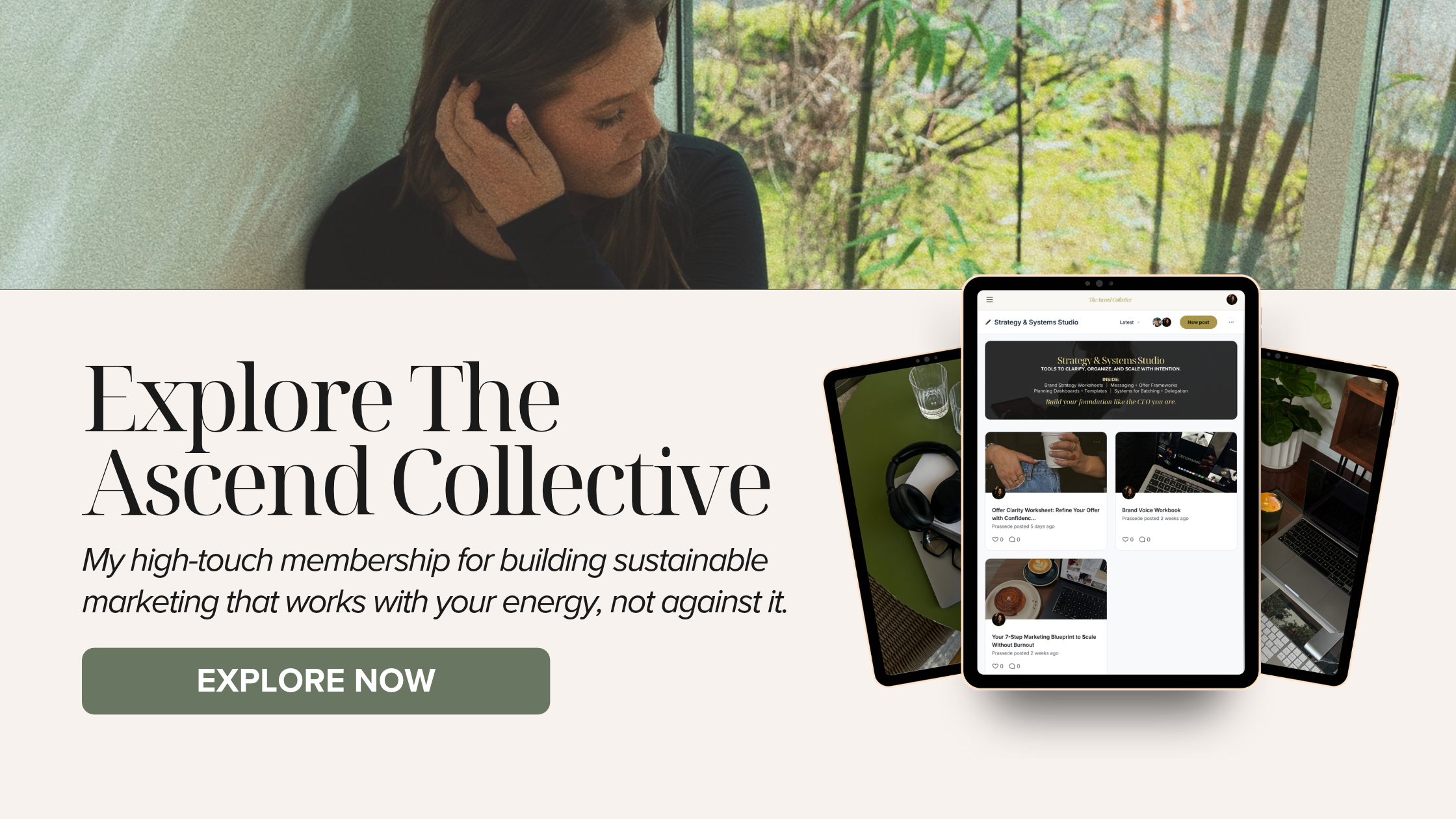
That particular ten minutes happened on a Wednesday morning inside The Ascend Collective, which is where I help business owners work through exactly this kind of thing in real time, the messaging, the positioning, the “wait, how do I even say what I do” knots that keep smart people stuck. If you’re tired of circling your own sentence alone, come work it out with me and a room of people doing the same.
You’re about to walk into a season full of people asking what you do. Holiday parties, family dinners, the chatty person in line for coffee. Every one of those is a tiny, free chance for your business to be understood and remembered, or politely forgotten.