
How to Plan a Month of Content in Under an Hour (Using AI)
If planning content feels like something you keep putting off, you are not lazy or undisciplined. You are probably working inside a system that asks you to make too many decisions at once.
Most people do not struggle with content because they lack ideas. They struggle because every time they think about posting or sharing something, it feels like starting over. New pressure. New expectations. A fresh mental load before they’ve even begun.
What actually works is building a repeatable rhythm. One that gives you direction without boxing you in and structure without killing your creativity.
This blog will show you how I personally plan a month of content in under an hour using your AI tool of choice. Not to replace your voice, but to support it. Not to automate creativity, but to make showing up feel more doable.

First, redefine what you are actually planning
You are not planning posts.
You are planning how people experience you over time.
Visibility is not just social media. It’s how often people hear from you, what they begin to associate with your work, and how clearly they understand what you care about.
When visibility feels unclear, everything feels heavier. When it has structure, consistency starts to happen naturally.
If planning has felt overwhelming, it is usually because the system you are using does not reflect how you actually work.
Step 1: Choose one core focus for the month
Every month needs a single point of direction. One intention that everything else can connect back to.
This isn’t about choosing a topic. It’s about choosing how you want to show up.
This might be:
Building trust and familiarity
Educating your audience
Reintroducing your work or services
Sharing your perspective more consistently
Creating steadier momentum after a quiet period
When this intention is clear, decisions get easier. You are no longer asking “What should I post?” You are asking “Does this support how I want to show up this month?”
AI prompt to use:
“Help me brainstorm one main content focus for this month based on my business goals. My audience struggles with [insert problem], and I want this month to support [insert outcome].”
Once this is defined, you have an anchor for the rest of your planning.
If you want help building this kind of monthly visibility rhythm without overthinking it, the Camera-Shy to Content-Ready Kit walks you through a low-pressure system you can return to again and again.

Step 2: Break visibility into weekly focus areas
Instead of planning individual posts, think about the different ways you’re willing to be seen.
Most people naturally rotate through different modes of visibility. Some days you share perspective. Some days you explain something. Some days you reconnect. Some days you simply show up without teaching or proving anything.
Breaking your month into weekly focus areas helps you stay visible without feeling repetitive or performative.
For example:
One week focused on sharing perspective or lived experience
One week focused on explaining or clarifying something
One week focused on connection or conversation
One week focused on repetition or reminders
These focus areas work whether you’re posting publicly, writing privately, or just practicing being seen.
AI prompt to use:
“Based on my intention, help me define four weekly focus areas for how I show up this month.”
Now you have a structure without pressure.
Step 3: Generate ideas without trying to sound impressive
Once your focus areas are clear, ask AI for ideas that fit within them.
This is not about writing polished content. It’s about creating options.
AI prompt to use:
“Give me five simple ways I could show up this week based on this focus area. Keep them clear and human.”
If the ideas feel basic, that’s not a problem. Familiar ideas are easier to act on. And action builds confidence.
Step 4: Use AI as a support, not a substitute
AI works best when it’s treated like an assistant, not a replacement.
You don’t need it to think for you. You need it to help you organize, clarify, and get unstuck.
Even small things, like asking it to match your tone or expand on something you already said, can make visibility feel less intimidating.
If you want guidance on using AI without losing your voice, the Camera-Shy to Content-Ready Kit focuses on structure and confidence first, not performance.

Step 5: Choose the easiest way to show up
Now decide how you want to bring these ideas to life.
That might be:
Writing a short post
Sharing a thought without editing it to death
Talking something out instead of scripting it
Posting something faceless
Repeating an idea you’ve already shared
Ask yourself:
What feels easiest right now?
What can I repeat without burning out?
What still works when my energy is low?
Visibility that fits your capacity is the kind that lasts.
Step 6: Place everything into a simple rhythm
You don’t need to optimize this. You just need to place things somewhere they belong.
Decide:
When you’ll show up
What you’ll focus on
How often feels manageable
AI prompt to use:
“Help me organize these ideas into a simple monthly visibility rhythm that feels realistic.”
That’s it. You now have a plan without pressure.
The real benefit is familiarity
The power of this system isn’t speed. It’s familiarity.
When you stop reinventing how you show up every time, your nervous system relaxes. Confidence grows through repetition, not hype.
Showing up stops feeling like a performance and starts feeling like a practice.

If you want support building this rhythm
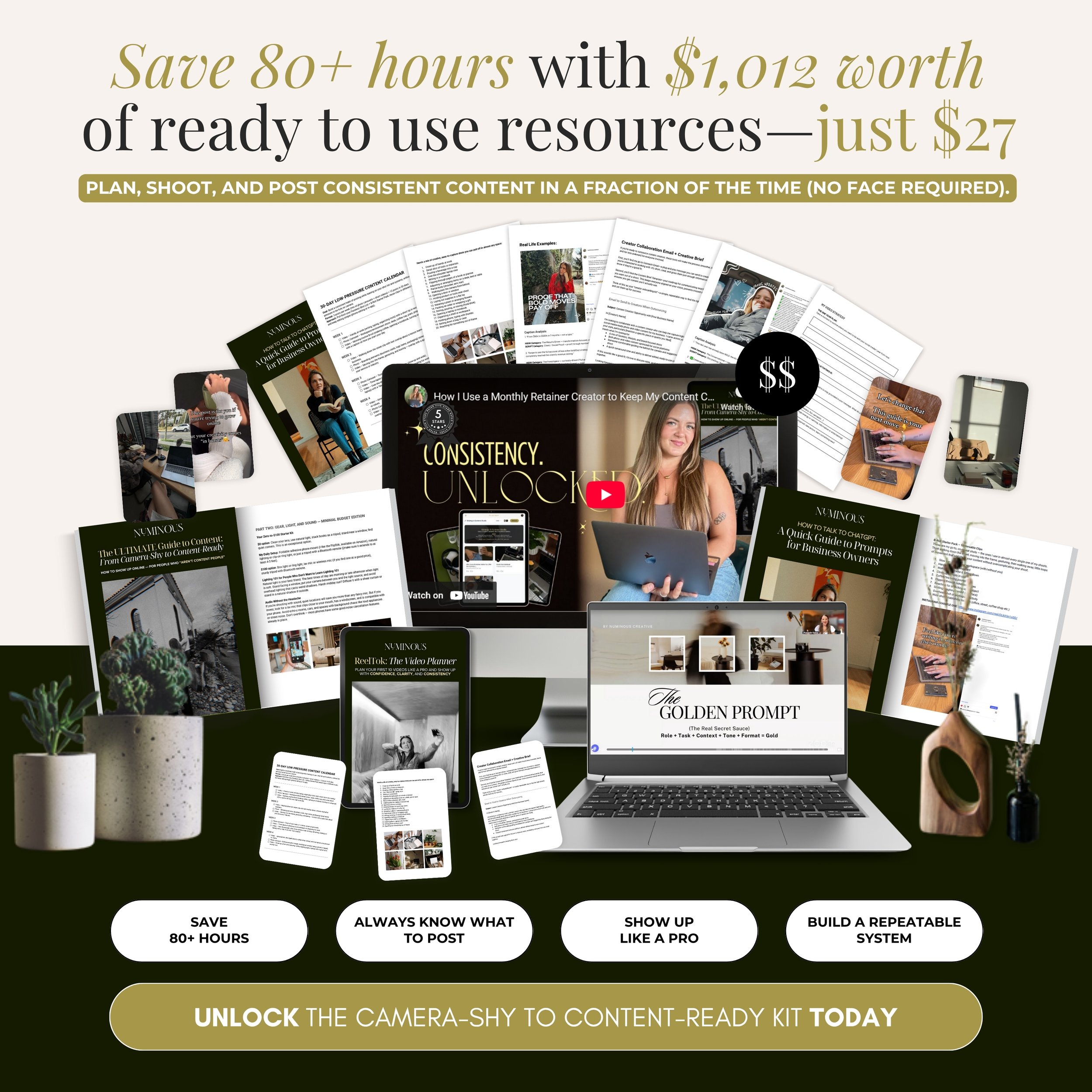
The Camera-Shy to Content-Ready Kit was created for anyone who wants visibility to feel calmer and more supportive.
It focuses on:
Low-pressure ways to show up
Building confidence through repetition
Using structure to reduce overwhelm
Making visibility feel human again
You don’t need to be louder.
You don’t need to be perfect.
You just need a rhythm you can return to.
If that’s what you’re looking for, the kit is there for you.